No products in the cart.


Trending
What People Photograph Matters
People usually photograph the part that made them feel something first.
Share
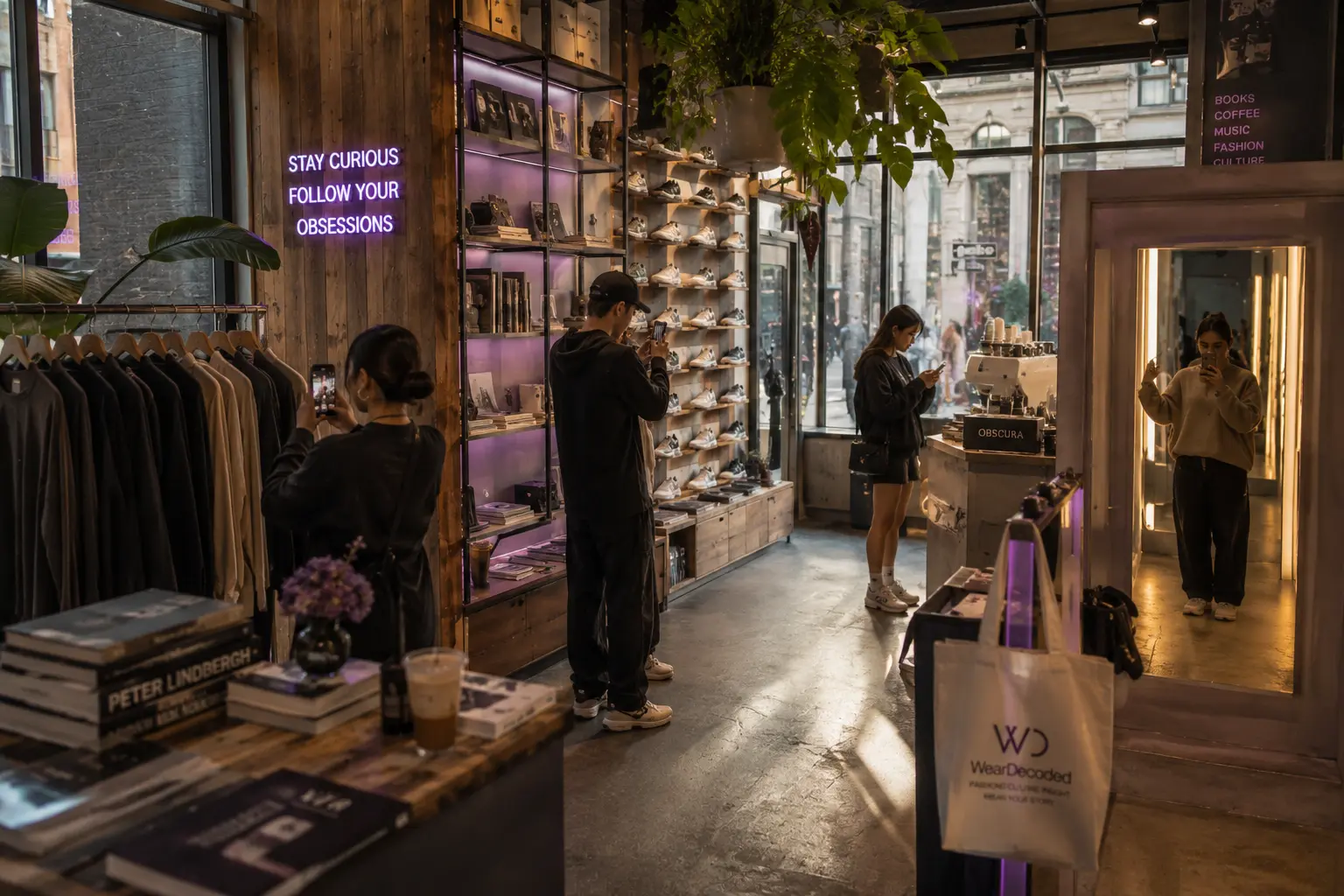
Most people do not consciously analyze why they stop to photograph something inside a store.
They just pull out their phone automatically.
Sometimes it is a fitting-room mirror with flattering lighting. Sometimes a stack of folded knitwear near a café corner. Sometimes a metallic staircase, a perfume shelf, a dressing-room curtain, or sunlight hitting fabric at the right angle for two minutes before disappearing again.
Those small moments matter more now than many formal campaigns do.
Fashion increasingly spreads through fragments.
A customer photographs a mirror selfie. Someone else reposts a café table inside the store. Another person notices the packaging in the background. Eventually the atmosphere starts traveling online before the product itself fully does.
People document environments before brands even finish explaining them.
People rarely document things they feel nothing toward.
WearDecoded
Stores Became Backgrounds For Visibility
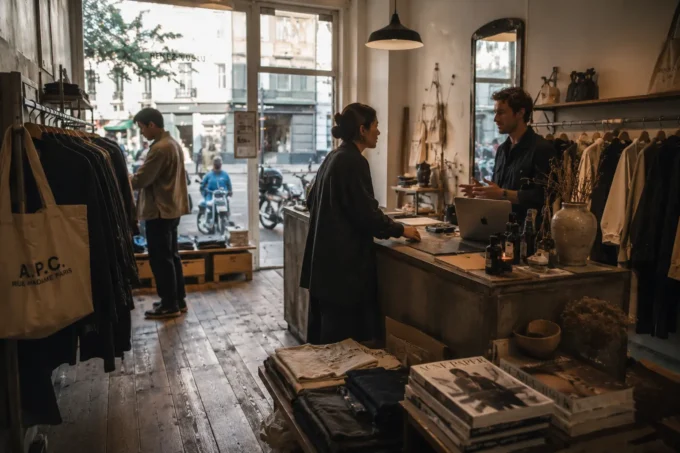
Retail spaces now function partly as media environments.
People no longer enter stores only to buy something. They enter to observe, browse, photograph, experience, compare, film, and attach certain places to identity. Some spaces become recognizable online simply because they repeatedly appear behind outfit photos, creator videos, mirror selfies, or casually filmed conversations.
The environment becomes culturally useful.
That is partly why brands now spend enormous energy on lighting, seating, flooring textures, café corners, mirrors, packaging, signage, and fitting-room design. They understand that if people willingly photograph a space, the audience begins distributing the atmosphere for free.
Some stores now feel designed for camera rolls as much as customers.
The Internet Changed What People Notice
Modern audiences became unusually visually literate.
Years of scrolling trained people to notice tiny details subconsciously. Bad lighting feels emotionally wrong immediately. Cheap materials become easier to recognize. Awkward displays feel forced. Over-designed luxury interiors sometimes feel emptier than smaller spaces with stronger taste and clearer identity.
People notice when environments feel believable.
That applies to fashion media too.
Publications, creator studios, websites, cafés, showrooms, and retail spaces now all compete inside the same visual ecosystem online. A messy product page, weak typography, or random stock imagery quietly damages trust even if the actual product remains strong.
Presentation shapes emotional memory first.
Not every meaningful fashion interaction begins with a purchase. Sometimes somebody simply remembers how a place felt. The mirror lighting. The soundtrack. The coffee. The way the fitting room curtains moved. The styling near the entrance. The atmosphere stays longer than the item itself.
People rarely photograph things they feel nothing toward.
Atmosphere Became Part Of Fashion Culture
Fashion visibility now spreads through small emotional moments instead of only major campaigns.
Someone posts a blurry mirror photo. Another person screenshots a corner display. A creator casually films a clothing rack while talking about something unrelated. Suddenly thousands of people absorb the visual language without interacting with the brand directly.
That type of visibility feels softer but often lasts longer.
Not because people stopped caring about products, but because products now compete inside larger lifestyle environments. Clothing exists beside cafés, playlists, apartments, airports, bookstores, creator routines, and public spaces constantly documented online.
Fashion became more environmental.
That is partly why unfinished or evolving spaces sometimes feel more interesting than perfectly polished ones. Audiences became more skeptical of artificial perfection. They trust environments that feel lived inside, repeated, and emotionally believable.
WearDecoded is intentionally evolving publicly for similar reasons. The platform will likely continue changing through contributors, collaborations, observations, and cultural shifts instead of pretending everything arrived fully formed from the beginning. People, brands, creators, photographers, and studios interested in contributing or collaborating can reach out through the Contact page or email .
Information in this post is accurate at the time of writing but may change over time. Always verify details independently when needed.


Related Articles
Trending
You Forgot an Outfit. Bangalore Will Fix It in 30 Minutes.
Every app delivering clothes fast in Bangalore — Zepto, Blinkit, Myntra M-Now,...
Trending
The Dress Style Influencers are Wearing Right Now
The biggest influencer dress trend right now feels quieter, softer, and far...
Trending
The Outfit Changes After 7PM
Night events expose which outfits were styled for real evenings and which...
Trending
Some Stores Feel More Honest
People often trust a fashion store emotionally before they trust the products...


Leave a comment