No products in the cart.


Trending
The Shopping Streets Stylish Tourists Actually Visit
Fashion travel increasingly revolves around atmosphere, local culture, and visually memorable streets rather than shopping malls alone.
Share
The most influential fashion shopping streets are no longer defined only by the brands operating there.
What makes certain districts memorable now is the atmosphere surrounding the stores themselves. A good shopping street functions more like a cultural ecosystem where cafés, bookstores, hotel lobbies, bakeries, vintage stores, galleries, music, architecture, sidewalks, and fashion all blend into one environment people want to experience physically instead of simply scrolling past online.
The street becomes part of the product.
That shift changed how stylish tourists travel. Many shoppers are no longer searching only for luxury malls or obvious designer logos. Increasingly, they look for neighborhoods with recognizable personality — places where local labels exist beside independent cafés, where people dress well naturally, and where the environment itself feels visually alive without needing artificial spectacle.
Fashion travel became more observational.
People Now Travel For Atmosphere
Certain shopping districts repeatedly dominate creator content because they create emotional texture naturally.
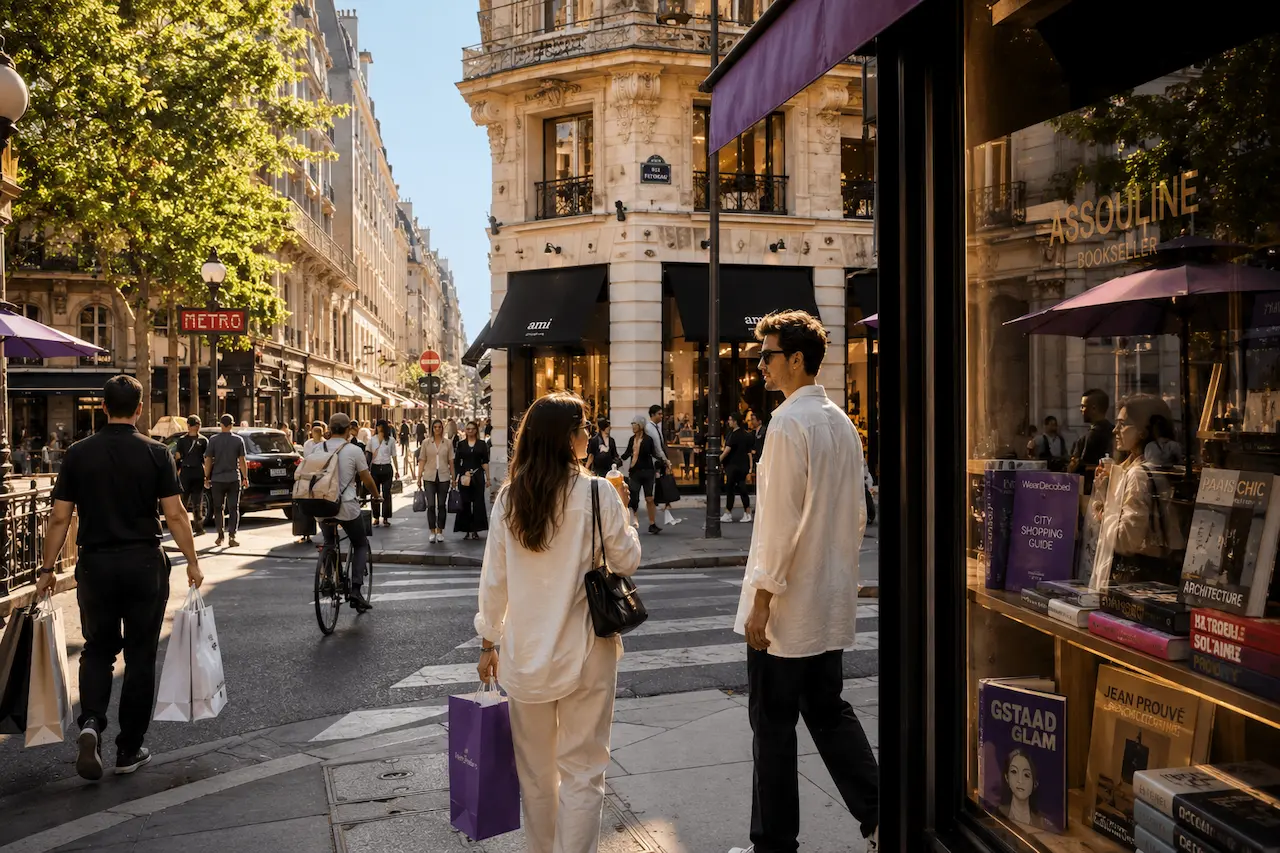
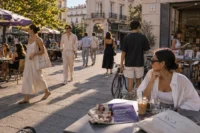
Someone photographs sunlight reflecting off storefront windows during late afternoon. Another person captures coffee cups beside shopping bags outside a quiet café. Metro exits, hotel entrances, side streets, bicycles, bookstores, flower stands, and even ordinary crosswalks become part of the visual memory surrounding the trip.
Lifestyle now photographs differently.
The internet made audiences highly sensitive to atmosphere, which is partly why fashion travel content increasingly focuses less on isolated products and more on how places feel as complete environments. A shopping district with strong visual rhythm creates more emotional attachment than a mall designed only around transactional convenience.
People visit for the feeling as much as the stores themselves.
Shopping Streets Became Creator Environments
Fashion districts now operate simultaneously as:
shopping destinations,
creator backdrops,
social spaces,
travel experiences,
and lifestyle branding environments.
That overlap changed how brands think about physical retail presence. A store located inside the right neighborhood often gains cultural value beyond the products it sells because the surrounding environment already communicates taste, identity, and aspiration before customers even walk through the doors.
Context shapes perception.
Independent cafés beside designer stores.
Vintage boutiques near luxury hotels.
Bookstores mixed with fashion spaces.
Local bakeries crowded with stylish tourists carrying shopping bags.
Those combinations create environments people remember emotionally instead of treating as generic retail zones.
The Internet Made Streets More Recognizable
Social media accelerated the visibility of certain fashion neighborhoods globally.
People now recognize specific shopping streets before visiting them physically because creators, photographers, influencers, and fashion travelers repeatedly document the same locations from slightly different perspectives. Over time, those streets become associated with particular aesthetics, lifestyles, and forms of cultural identity.
Some places become visual shorthand for taste itself.
That visibility affects travel behavior directly. Tourists increasingly plan fashion trips around neighborhoods rather than individual stores because the environment surrounding the shopping experience matters almost as much as the products purchased there.
A good fashion street creates movement naturally.
People walk slower.
They observe more.
They spend time outside stores instead of rushing between purchases.
The atmosphere encourages lingering.
That pacing changes how fashion is experienced physically.
Fashion Culture Lives Beyond Retail
Interesting shopping districts succeed because they feel socially alive beyond commerce alone.
The most memorable areas usually contain enough unpredictability to feel human:
unexpected conversations,
small independent spaces,
people dressed differently,
music drifting from cafés,
hotel terraces filling during sunset,
or creators shooting content casually beside ordinary street corners.
Fashion culture increasingly depends on environments capable of blending lifestyle and retail together naturally.
WearDecoded is interested in documenting how shopping streets, travel culture, creator ecosystems, and visual identity continue shaping modern fashion perception because some of the strongest fashion experiences now happen outside traditional retail environments entirely.
Stylists, photographers, travelers, creators, independent retailers, and contributors documenting fashion culture or visually interesting shopping environments can reach out through the WearDecoded Contact Page or email .
Travel experiences, shopping culture, and fashion districts vary across cities, seasons, brands, and cultural environments over time.

Related Articles
Trending
You Forgot an Outfit. Bangalore Will Fix It in 30 Minutes.
Every app delivering clothes fast in Bangalore — Zepto, Blinkit, Myntra M-Now,...
Trending
The Dress Style Influencers are Wearing Right Now
The biggest influencer dress trend right now feels quieter, softer, and far...
Trending
The Outfit Changes After 7PM
Night events expose which outfits were styled for real evenings and which...
Trending
Some Stores Feel More Honest
People often trust a fashion store emotionally before they trust the products...