No products in the cart.


Decoded
People Stay Longer In Better Spaces
Some fashion spaces quietly make people slow down without forcing them to.
Share
people rarely calculate the exact reason they stay inside certain fashion spaces longer than others.
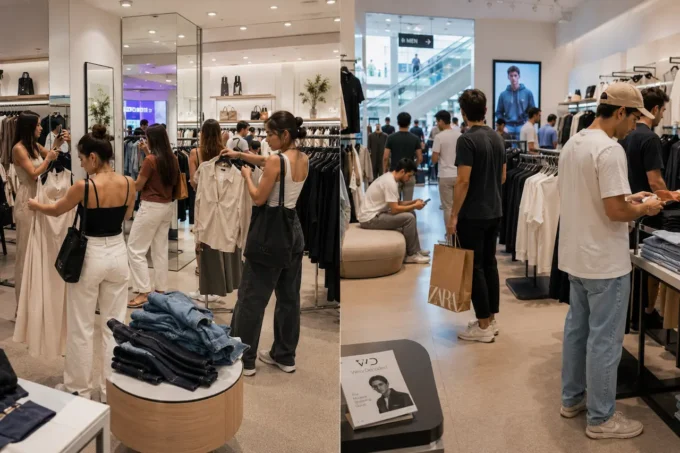
Sometimes it is the lighting reflecting softly against fabric instead of feeling harsh or commercial. Sometimes it is the pacing of the room, where nothing feels overcrowded or visually exhausting. In other places, it may simply be the absence of pressure — nobody immediately asking questions, pushing products, or rushing customers toward checkout before they have even settled into the environment properly.
Those details affect behavior more than many brands openly acknowledge.
Modern fashion environments increasingly compete through experience rather than inventory alone. Most products can now be discovered online within seconds. What physical spaces still offer is emotional atmosphere: the feeling of walking into a place where people actually want to spend time instead of completing transactions as quickly as possible.
That difference changes how attention works.
Atmosphere quietly changes how long people pay attention.
WearDecoded
Good Spaces Change Customer Behavior
Interesting stores usually create slower movement naturally.
People walk differently.
They browse longer.
They notice details they might normally ignore online.
They touch fabrics more carefully.
Conversations become less rushed.
The environment itself influences how people interpret the products around them.
A calm café inside a store may encourage somebody to remain another twenty minutes. Comfortable seating changes pacing. Softer music lowers tension. Better lighting makes products feel easier to imagine inside real life instead of inside advertising campaigns.
Retail psychology became more environmental.
That shift extends beyond stores too. Hotels, bookstores, galleries, creator studios, pop-up events, and even digital editorial platforms increasingly compete through atmosphere because audiences became emotionally exhausted by environments designed only for speed and visibility.
People now notice when spaces feel overstimulating.
Attention Works Differently In Calm Environments
The internet trained consumers to move quickly through information.
- Scroll.
- Swipe.
- Skip.
- Compare.
- Exit.
Physical fashion spaces increasingly succeed by interrupting that rhythm instead of copying it.
Stores that feel visually calm often create stronger memory because people remain observant longer once the environment stops demanding immediate reaction constantly. They notice textures, product placement, conversations, architecture, scent, mirrors, and small visual details that would disappear entirely inside faster environments.
Good spaces create emotional breathing room.
That breathing room became commercially valuable because customers increasingly associate comfort with trust. People may not consciously explain why they liked spending time inside a particular store, hotel lobby, showroom, or creative space, but they usually remember how the environment made them feel physically.
That memory affects whether they return later.
Better Environments Often Feel Less Forced
Many memorable fashion spaces share one quality quietly:
they do not appear desperate for attention.
The strongest environments usually feel intentional without trying too aggressively to prove they are important. The styling feels natural. The music fits the space. Staff members move comfortably instead of performing scripted luxury behavior. Products have enough room to exist without visual overload surrounding them constantly.
That restraint matters.
Consumers became highly sensitive to environments designed entirely around performance metrics, social-media visibility, and engineered engagement. Spaces that feel calmer often stand out more precisely because they are no longer competing for attention aggressively every second.
Atmosphere quietly changes how long people pay attention.
WearDecoded is interested in documenting how retail spaces, creative environments, hospitality culture, and modern fashion experiences increasingly shape consumer behavior beyond products alone because many meaningful interactions begin long before anybody decides to buy something.
Retail designers, visual merchandisers, photographers, creators, independent stores, and contributors interested in thoughtful fashion environments or customer experience observations can reach out through the WearDecoded Contact Page or email .
Retail environments, customer behavior, and fashion experiences vary across locations, brands, audiences, and cultural contexts over time.

Related Articles
Decoded
The Cafés Where Projects Begin
Some of the most important fashion collaborations begin long before they look...
Decoded
Smartphones Changed Fashion Photography
Fashion photography became more believable once cameras stopped feeling distant.
Decoded
Good Styling Changes Perception
People often think they are judging clothes when they are actually judging...


Leave a comment