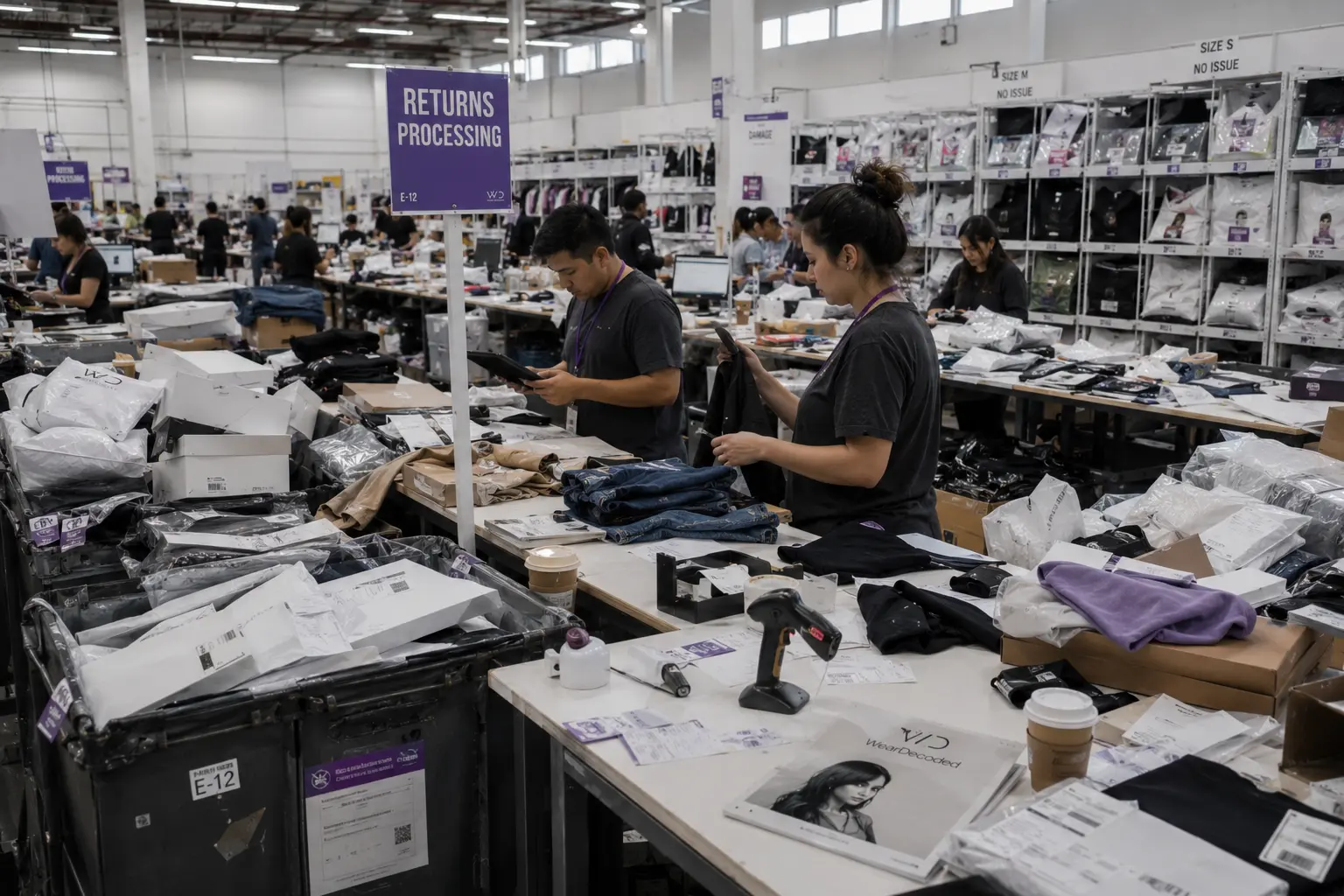
the returns counter sees a side of fashion culture that most campaigns never acknowledge publicly.
Retail workers quietly witness the difference between what looked exciting online and what actually worked in real life. Wrong sizing, disappointing fabrics, awkward fits, impulse purchases, uncomfortable shoes, and products that felt emotionally convincing during checkout but strangely unnecessary three days later all pass through the same desk eventually.
That process reveals something important about modern fashion behavior. Clothing is no longer purchased only through practical need. It is often purchased through mood, aspiration, creator influence, social visibility, algorithmic repetition, and the temporary emotional momentum created by internet culture itself.
The return counter slows that momentum down.
Products usually meet reality at the returns desk.
WearDecoded
Online Fashion Changed Consumer Decisions
Shopping online accelerated fashion decision-making dramatically over the last decade. People now buy products while scrolling late at night, watching creator videos between unrelated content, reacting to limited-time discounts, or imagining themselves inside carefully designed lifestyle environments presented through campaigns and social media feeds.
The emotional speed of the purchase increased faster than the practical evaluation behind it.
A dress may look perfect inside soft campaign lighting but feel completely different in daylight. Oversized trousers styled beautifully online may become difficult to wear comfortably in ordinary situations. A jacket purchased because it suited somebody else’s aesthetic online may quietly stop making sense once it enters daily life.
Returns often expose the distance between visual aspiration and physical experience more honestly than most trend reports ever could.
Retail Workers Notice Behavioral Patterns Early
Fashion stores collect enormous behavioral information through returns, exchanges, fitting-room hesitation, customer questions, and post-purchase dissatisfaction. Retail employees usually recognize patterns long before official industry conversations begin discussing them publicly.
They notice which colours repeatedly come back. Which fabrics disappoint people after touching them physically. Which products generate online excitement but uncertainty during fitting-room try-ons. Which items customers almost keep before eventually deciding they never realistically belonged inside their wardrobe.
Those observations matter because high visibility does not always create long-term trust.
A product may sell quickly because the marketing worked effectively, the creator campaign reached the right audience, or the algorithm amplified the trend aggressively. But the return process eventually reveals whether the product genuinely survived outside controlled campaign environments and entered somebody’s real routine successfully.
Reality tests fashion differently than advertising does.
The Gap Between Branding And Experience Became More Visible
Modern consumers became increasingly aware of the difference between presentation and lived experience. Years of online shopping trained people to recognize how heavily lighting, posing, editing, styling, and environmental atmosphere shape perception before products even arrive physically.
That does not mean aspiration disappeared from fashion. People still enjoy beautiful campaigns, strong visual identity, and emotionally compelling branding. But audiences now trust products more when they continue making sense after the excitement fades.
Wearability matters again.
Consumers increasingly value clothing that survives movement, weather, repetition, commuting, long workdays, travel, laundry, body insecurity, and ordinary life without collapsing emotionally once the internet moment disappears.
The strongest products usually feel convincing both online and offline.
Fashion Reality Often Begins Quietly
The fashion industry publicly focuses on launches, campaigns, collaborations, fashion weeks, creator partnerships, and trend forecasting because those moments are visually exciting and commercially useful. But quieter operational spaces often reveal equally important truths about consumer behavior and long-term brand perception.
Returns desks. Customer service chats. Exchange requests. Fitting-room hesitation. Product reviews written weeks later.
Those spaces reveal how people actually live with fashion after the performance of purchasing ends.
WearDecoded is interested in documenting those quieter realities surrounding retail psychology, online shopping behavior, creator influence, product trust, and modern consumer culture because some of fashion’s most revealing stories begin long after the launch campaign disappears from public attention.
Not every important fashion story starts on a runway. Some begin at the moment somebody decides whether a product genuinely belongs inside their life or not.
People, retailers, brands, creators, photographers, and contributors interested in collaborating or sharing ideas can reach out through the Contact page or email .
Consumer shopping behavior, return patterns, and retail experiences vary across brands, products, regions, and individual preferences. Observations discussed in this article reflect broader fashion and ecommerce behavior trends.








Leave a comment